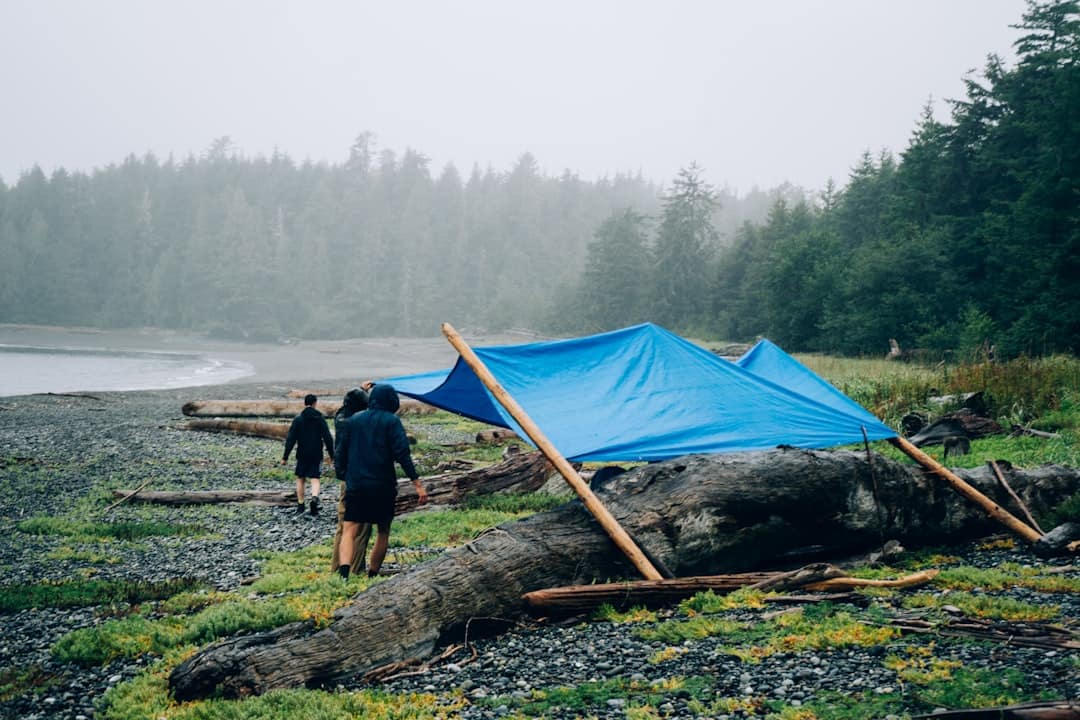
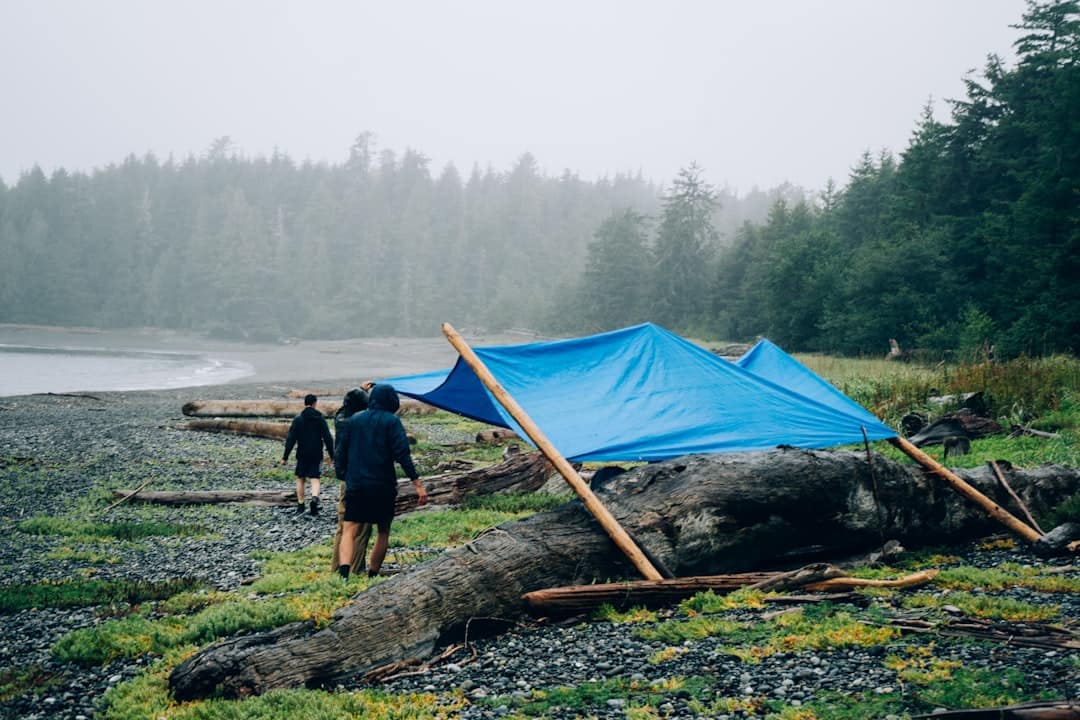
Photo by Conrad Stel on Unsplash
Key Takeaways
- Choose a tarp with a waterproof rating of at least 3000 mm.
- Use a reliable bowline knot for securing guylines.
- Maintain a ridge line height of at least 4-6 feet for optimal drainage.
- Implement a drip line trick to prevent rain runoff from entering your shelter.
- Secure your guylines with tensioners to withstand strong winds.
How to Pitch a Tarp Shelter in Heavy Rain and Wind: Step-by-Step
In heavy rain and wind, having a reliable method to set up a tarp shelter is crucial for staying dry and secure. Here’s a detailed, step-by-step approach to pitching a tarp shelter in such conditions.
- Choose the Right Location: Look for high ground to avoid water pooling. Ideally, select a spot that is at least 100 feet away from potential hazards like dead trees or branches that may fall in high winds. Assess the wind direction; position the tarp so that it faces into the wind to minimize resistance. If possible, look for natural windbreaks such as shrubs or rocks that can provide additional shelter from gusts.
- Prepare Your Gear: Use a tarp with at least 3000 mm waterproof rating. We recommend the ENO ProFly (weighing 17 oz) or Sea to Summit Tarp (around 20 oz). Bring along 550 paracord for the ridge line and guylines, as it has a tensile strength of 550 lbs. Don’t forget stakes like the MSR Groundhog (weighing 0.4 oz each) that are effective in various terrains. Consider also bringing a lightweight tarp pole (such as the REI Co-op Flexlite Tarp Pole, weighing 6.9 oz) to help support the center of the tarp if conditions allow.
- Lay Out Your Tarp: Spread the tarp flat on the ground, orienting it into the wind direction to minimize wind resistance. Ensure that the tarp is free of debris and positioned to maximize living space underneath. You might also want to fold the edges of the tarp slightly inward to create a small barrier against wind-blown rain.
- Set Up the Ridge Line: Use a sturdy rope or cord (at least 550 paracord) for the ridge line and secure it between two trees or solid anchors at a height of 4-6 feet. Make sure the line is taut; a loose ridge line can sag under rain, leading to pooling. To secure the ridge line, you can use a double bowline knot for added security. Measure the distance between the two trees to ensure your ridge line is long enough, ideally at least 10-12 feet for most tarp setups.
- Secure the Corners: Use bowline knots to tie the corners of the tarp to the ground. This knot is strong and easy to untie even when wet, making it ideal for quick adjustments. For maximum stability, drive the stakes into the ground at an angle away from the tarp. If ground conditions are poor, consider using deadman anchors or rocks to secure the corners more effectively. Ensure each corner is pulled tight to avoid flapping in the wind.
- Attach Guylines: Use tensioners to attach guylines from the tarp edges to stakes in the ground. Position them at a 45-degree angle for stability. This angle allows the tarp to shed wind and rain effectively. Ensure the tensioners are secure — options like the MSR Cam Ring are excellent for this purpose. If possible, use reflective guylines to enhance visibility in low light situations, which can help prevent trips and falls during setup.
- Implement the Drip Line Trick: Tie a small loop of cord around the ridge line to catch water droplets and divert them away from your sleeping area. This can be as simple as a piece of paracord tied in place. The height of this loop should be about 2-3 feet below the ridge line to effectively redirect water. You can create an additional layer of protection by placing a small tarp or a piece of plastic under the drip line to catch water and further divert it away.
- Test Stability: Pull on the tarp and guylines to ensure everything is tight and secure. Adjust as necessary to withstand wind gusts. It’s advisable to check the setup periodically during storms to ensure everything remains secure. If you notice any sagging or loosening, re-tighten your guylines and ridge line as needed. Consider keeping a small mallet handy to drive stakes deeper into the ground if conditions change.
Common Failure Modes and Fixes
Even with the best setup, issues can arise. Here’s how to troubleshoot:
- Puddling: If you notice water pooling on the tarp, lower the ridge line slightly to increase the slope and enhance drainage. Aim for a slope of at least 30 degrees for effective runoff. You can also create additional drainage by lifting one corner of the tarp higher than the others temporarily until the rain subsides.
- Wind Damage: If the tarp flaps excessively, tighten guylines further. Adding extra stakes can also help. In extreme conditions, consider using additional guylines to create a more stable structure. If the wind is particularly strong, consider lowering the tarp’s height slightly for better aerodynamics.
- Water Leaks: Check your tarp for small holes or seams that may need waterproofing. Use seam sealer or tape like McNett Seam Grip as a temporary fix. Keeping a small repair kit with patches and tape is recommended for emergencies. For more extensive leaks, consider using waterproof fabric tape to cover larger areas of concern until you can return home.
When to Turn Back or Seek Help
If conditions worsen to severe storms or lightning, it’s crucial to seek shelter in a more secure location or return to a safe area. Trust your instincts and prioritize safety. If you notice frequent gusts exceeding 30 mph or hear thunder, it’s time to move. Always have an escape plan and know the nearest safe area or trail. In some situations, particularly if you are alone or the weather deteriorates rapidly, it may be wise to retreat to a designated campsite or cabin.
If you’re not familiar with the area, consider carrying a portable weather radio to stay updated on changing conditions. It’s also prudent to have a plan for emergency communication, such as a satellite messenger or a personal locator beacon. Check local weather services for updates and alerts before and during your outing.
Quick Reference Summary
To pitch a tarp shelter in heavy rain and wind: select a suitable location, use a waterproof tarp, establish a ridge line and secure guylines, and implement drainage tricks. Always test stability and be prepared to adapt to changing conditions. Having the right gear and knowledge can make all the difference in staying dry and safe in adverse weather.
Related Reading
- Affordable Lightweight 2-Person Backpacking Tents Under $100
- Two Days in Arches: Essential Hikes and Scenic Stops
- 48 Hours in Antelope Canyon: Must-See Spots and Hidden Gems
- Explore Wheelchair Accessible Hiking Trails in Oregon: Detailed Maps Included